
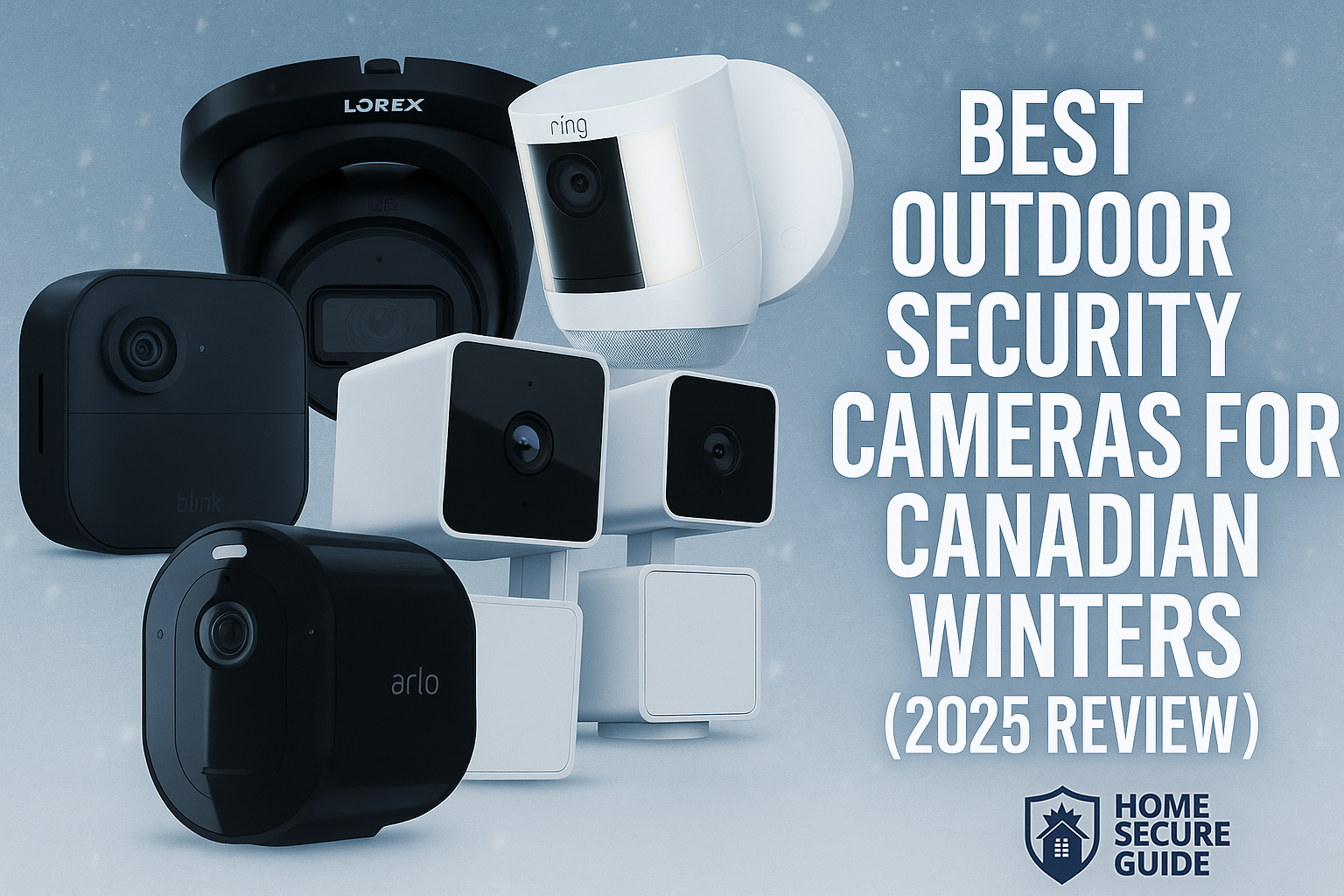
The 5 Best Outdoor Security Cameras for Canadian Winters (2025 Review)
Investing in a smart home security camera in Canada comes with a unique and often unspoken fear: will it survive the first deep freeze? It’s a valid concern. We’ve all heard stories of expensive gadgets failing when the temperature plummets, turning a promise of security into a frozen piece of plastic. Canadian winters are not just about a bit of snow; they are a relentless test of endurance against extreme cold that saps battery life, ice storms that obscure lenses, and blizzards that challenge even the most robust weatherproof seals.
Generic “weatherproof” claims on a product box are not enough. A camera that works perfectly in a rainy Vancouver winter might completely fail in a -40°C Winnipeg cold snap. That’s why this guide exists. We’ve moved beyond marketing claims to identify outdoor security cameras that are truly “winter-proof” and built for the realities of a Canadian climate.
This 2025 guide will serve as the definitive report for Canadian homeowners. We will break down the essential features you need to look for in any cold weather security camera, from temperature ratings and power sources to video quality that holds up during our long, dark winter nights. We will then provide in-depth reviews of our top 5 picks, each chosen to meet different needs and budgets, ensuring you can make an informed investment that provides peace of mind all year round.
Disclosure: As an Amazon Associate, we earn from qualifying purchases—at no extra cost to you. Our recommendations are based on thorough research and Canadian homeowner needs, and commissions never influence our reviews
How We Evaluated the Best Cold-Weather Security Cameras for Canada
To find cameras truly worthy of the “Canadian Moat” designation, we established a rigorous evaluation process. This methodology goes beyond surface-level features to analyze the core technologies that determine whether a camera will thrive or fail in a harsh winter environment. Understanding these criteria will not only help you trust our recommendations but will also empower you to assess any outdoor security cam like an expert.
Beyond “Weatherproof”: Decoding Extreme Temperature Resilience
The single most important specification for a Canadian outdoor camera is its operating temperature range. Many manufacturers list this, but the numbers vary significantly and tell a crucial story. Our top picks demonstrate a wide range of capabilities, from a minimum of -10°C for the Reolink Argus 3 Pro to an exceptional -30°C for our top-rated Lorex model. Models from Wyze, Blink, and Arlo establish a strong baseline for most Canadian climates with a -20°C rating.
However, the advertised operating temperature only tells half the story. A critical factor often buried in the fine print is the distinction between a camera’s ability to operate in the cold and its ability to charge its battery. Lithium-ion batteries, which power the vast majority of wireless security cameras, have a fundamental chemical limitation: they cannot be charged at temperatures below freezing (0°C) without risking permanent damage.
This has profound implications for Canadian homeowners with a battery-powered security camera. If you have one plugged into an outlet or connected to a solar panel during a cold snap in January, it is not charging. The power source is merely running the camera’s operations while the battery’s charge level remains static or continues to deplete. This creates a false sense of security, as the camera will inevitably run out of power and shut down during the coldest, darkest days of the year, precisely when you need it most. This limitation fundamentally alters the value of battery-powered devices in Canada, making them high-maintenance items in winter rather than “set-and-forget” solutions.
Built for Blizzards: Understanding IP and IK Ratings
After temperature, a camera’s physical defense against the elements is paramount. This is measured by its Ingress Protection (IP) rating. As outlined in standards referenced by the Canadian Electrical Code, this two-digit number tells you how well a device is sealed against solids (like dust and blowing snow) and liquids (like rain and melting ice).
The first digit rates solid protection (from 0-6), and the second rates liquid protection (from 0-9). For an outdoor camera in Canada, a rating of IP65 is the absolute minimum acceptable standard. This means the camera is completely dust-tight and can withstand water jets from any direction, making it resilient against driving rain and snow. Many of our top picks, including models from Wyze and Blink, meet this IP65 standard. Higher-end models from Lorex often carry an IP67 rating, meaning they can be temporarily submerged in water, offering an even greater level of protection and peace of mind.
While less common on consumer-grade cameras, an IK rating measures impact resistance. An IK10 rating, for instance, signifies that a camera’s housing is vandal-proof and can withstand significant force, such as from falling ice or deliberate tampering. This speaks to the overall physical toughness of a camera, with models featuring metal housings (like many from Lorex) generally offering more durability than their plastic counterparts.
It is essential to view these ratings correctly. An IP rating is a necessary but insufficient condition for winter survival. A camera can be perfectly waterproof with an IP67 rating but will still fail in a Calgary winter if its operating temperature is only -10°C. Therefore, the IP rating should be considered a “pass/fail” ticket for entry, while the operating temperature is the true performance metric for a Canadian climate.
Powering Through the Cold: Wired, Battery, and Solar Explained
The choice of power source is arguably the most critical decision a Canadian homeowner will make, as it represents a direct trade-off between installation convenience and cold-weather reliability.
- Wired Cameras: These models, like those from Lorex and our budget pick from Wyze, are the most reliable option for extreme cold. An outdoor wired camera draws power directly from your home’s electrical system, so its performance is not dependent on temperature-sensitive battery chemistry. The trade-off is a more complex installation that may require drilling and running cables.
- Battery-Powered Cameras: A wireless outdoor security camera from brands like Arlo, Blink, and Ring is popular for supreme installation flexibility. You can mount them anywhere within Wi-Fi range in minutes. However, as discussed, this convenience comes with significant winter caveats. Battery life will be noticeably shorter in the cold, and they will not recharge below freezing. The Blink Outdoor 4 is a standout in this category, with a claimed battery life of up to two years, which minimizes the maintenance burden, though its performance will still be impacted by the cold.
- Solar Panels: Often marketed as a solution for battery life, solar panels from brands like Reolink, Eufy, and Arlo are an excellent way to supplement power and reduce manual charging. However, they are subject to the same sub-zero charging limitation as any other power source. In Canada, a solar panel is best viewed as a “three-season” convenience, as it will be ineffective at charging the battery during the coldest parts of winter.
This choice should not be framed as “which is better?” but rather “which compromise are you willing to make?” For homeowners in the harshest climates (the Prairies, Northern Ontario), the reliability of a wired connection is paramount. For those in more temperate coastal regions, the convenience of a battery-powered model may be a justifiable compromise.
Seeing in the Dark: Video Quality and Night Vision for Long Winter Nights
In Canada, winter means darkness can descend as early as 4:30 PM. This means a significant portion of potential security events will occur in low-light conditions, making the quality of a camera’s night vision arguably more important than its daytime resolution.
- Resolution: The market offers a range of options, from 1080p HD (Blink) to 2K (Arlo, Wyze) and even 4K Ultra HD (Lorex, Eufy). Higher resolution is not just about a prettier picture; it allows for greater clarity when using digital zoom, which is crucial for identifying distant faces or license plates and achieving the best video quality possible.
- Night Vision: There are two primary types of night vision. Traditional infrared (IR) night vision produces a black-and-white image and is effective at detecting motion. However, color night vision provides vastly more detail, which can be critical for identification purposes. Most cameras achieve this with a powerful, motion-activated spotlight, as seen on models from Arlo, Ring, and Reolink. Some premium Lorex cameras offer a distinct advantage: they can produce color images in low ambient light without needing a bright spotlight, making them a stealthier security option.
For Canadian homeowners, prioritizing a camera with excellent night vision performance is a strategic choice. A camera with mediocre night vision is simply ineffective for a large part of the day during winter. Therefore, features like a powerful spotlight or superior low-light image sensors should be weighed heavily in any purchasing decision.
A Head-to-Head Comparison of Canada’s Best Winter-Proof Cameras
To help you quickly compare our top recommendations, this table summarizes the most critical specifications for surviving a Canadian winter. Use it to narrow down your choices before diving into the detailed reviews of the cameras on our list below.
Outdoor Security Camera Comparison
| Model | Best For | Min. Operating Temp (°C) | IP Rating | Resolution | Power Source | Storage Options | Subscription Required? |
|---|---|---|---|---|---|---|---|
| Lorex 4K Smart Deterrence | Extreme Cold & Reliability | –30°C | IP67 | 4K | Wired (PoE) | Local (NVR) | No |
| Arlo Pro 5S 2K | Wireless & Smart Home | –20°C | IP65 / Weather-Resistant | 2K | Battery, Solar | Cloud, Local (Hub) | Yes (for full features) |
| Wyze Cam Pan v3 | Budget & Value | –20°C | IP65 | 1080p | Wired (USB) | Local (microSD), Cloud | Optional |
| Blink Outdoor 4 | Battery Life & Low Maint. | –20°C | IP65 | 1080p | Battery (AA) | Local (Sync Module), Cloud | Yes (for some features) |
| Ring Spotlight Cam Pro | Motion-Activated Lighting | –20.5°C | IP65 / Weather-Resistant | 2K | Battery, Solar, Wired | Cloud | Yes |
In-Depth Reviews: Our Top 5 Picks
Here are our detailed evaluations of the five best outdoor security cameras for cold that have proven their mettle and are ready for the challenges of a Canadian winter.
1. Lorex 4K Smart Deterrence IP Camera: Best Overall for Extreme Cold
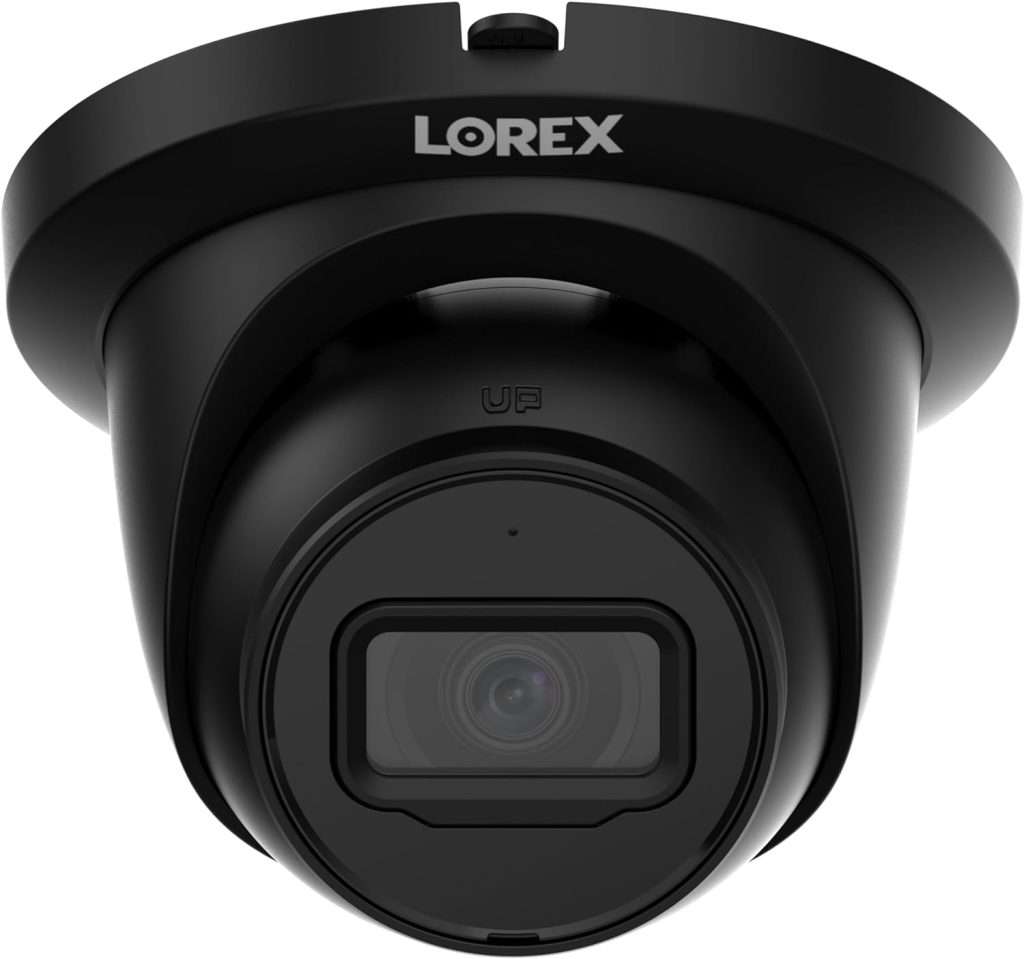
Who it’s for: The homeowner who places the highest premium on ultimate reliability and performance. This user prioritizes a system that will work flawlessly through the harshest blizzard and is willing to accommodate a wired installation to achieve that peace of mind.
Winter Performance: This is where the Lorex camera stands in a class of its own. It boasts an industry-leading minimum operating temperature of -30°C (-22°F) and a formidable IP67 weatherproof rating, which means it can be temporarily submerged in water. This isn’t just a security camera; it’s a piece of hardened equipment built for the most extreme Canadian conditions. Because it is a wired Power-over-Ethernet (PoE) device, its performance is completely independent of ambient temperature, eliminating all the battery-related concerns that plague its wireless competitors.
Key Features: The camera delivers stunning 4K Ultra HD resolution, providing crystal-clear video that allows for meaningful digital zoom on important details. A key advantage is its subscription-free model; all footage is stored locally on a Network Video Recorder (NVR), meaning there are no mandatory monthly fees. It also features smart motion detection that can differentiate between people and vehicles, reducing false alerts. Active deterrence features, including a motion-activated warning light and a remote-triggered siren, provide an additional layer of security. The fact that Lorex is a proudly Canadian company also adds a level of trust and local relevance.
Verdict: The Lorex 4K Smart Deterrence IP Camera is the undisputed champion for extreme cold weather security. It offers professional-grade features, unparalleled durability, and the long-term value of a subscription-free system. If your property can accommodate a wired installation, there is no more reliable choice for weathering a Canadian winter.
Pros:
- Exceptional -30°C minimum operating temperature
- Wired power for ultimate cold-weather reliability
- Stunning 4K resolution and excellent color night vision
- No required monthly subscription fees
- Durable IP67 weatherproof rating
Cons:
- Installation is more complex than wireless models
- Higher initial investment for a full system with an NVR
👉 Check Latest Price on Amazon Canada → Lorex 4K Smart Deterrence IP Camera
2. Arlo Pro 5S 2K: Best Wireless Camera for Smart Home Integration
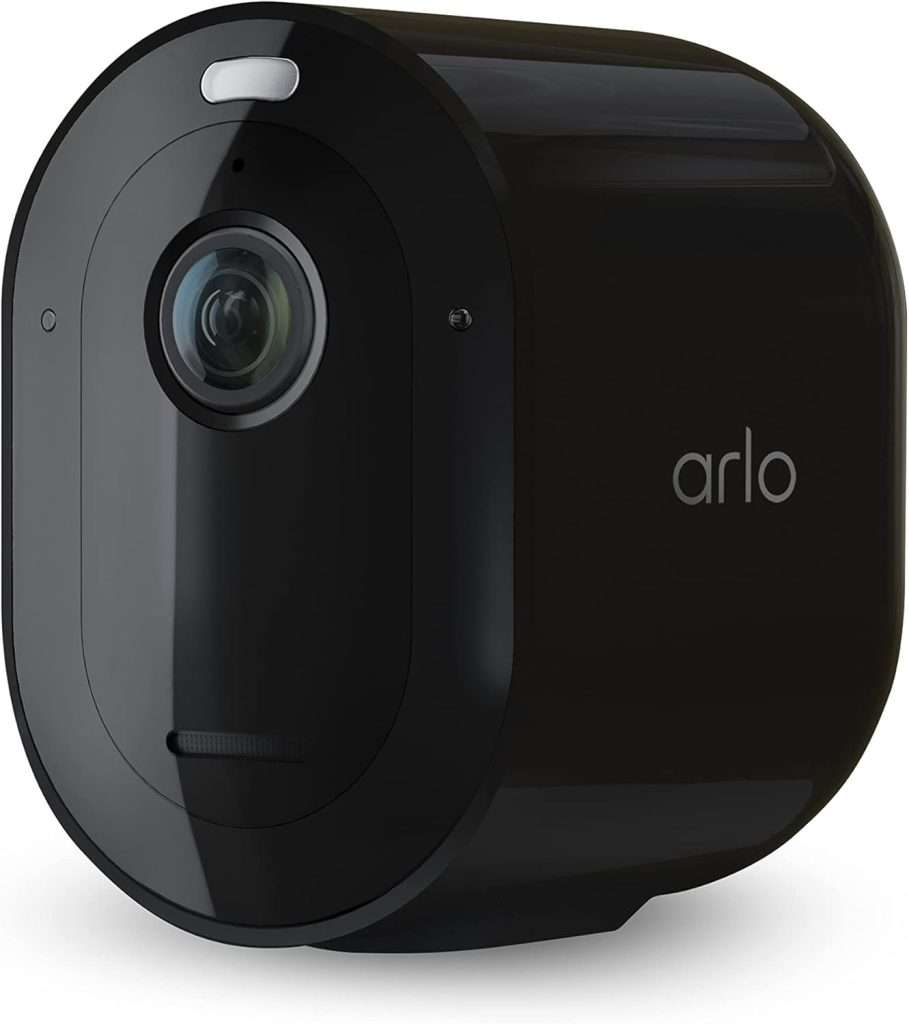
Who it’s for: The tech-savvy homeowner who desires a best-in-class wireless camera with outstanding video quality and deep, seamless integration with their existing smart home ecosystem.
Winter Performance: The Arlo Pro 5S 2K is officially rated to operate down to -20°C (-4°F), making it a suitable choice for the majority of Canadian winter conditions. Its wire-free design offers incredible installation flexibility. However, it is subject to the critical lithium-ion battery limitation: it will not charge at temperatures below 0°C. This is a crucial caveat. Homeowners in regions that experience prolonged deep freezes may find themselves needing to bring the batteries indoors to charge, which significantly reduces the convenience factor of a wireless system.
Key Features: The camera captures video in crisp 2K HDR, offering a noticeable step up in detail from 1080p models. It features an expansive 160-degree field of view, allowing you to see more of your property with a single camera. Excellent color night vision is enabled by a powerful, integrated spotlight that illuminates subjects upon detecting motion. Arlo’s platform offers deep integration with Amazon Alexa, is one of the best for Google Home, and supports Apple HomeKit. It also has some of the most advanced AI detection features on the market, capable of distinguishing between people, packages, animals, and vehicles, though these require a subscription.
Verdict: The Arlo Pro 5S 2K is a superb, feature-rich wireless camera that delivers on its promise of high-quality video and smart features. It is the top choice for those who prioritize smart home integration and wireless convenience. However, its full potential is locked behind a subscription plan, and its battery charging limitations in freezing temperatures make it a calculated choice for Canadians in the coldest climates.
Pros:
- Excellent 2K HDR video quality
- Wide 160-degree viewing angle
- Broad smart home compatibility (Alexa, Google, HomeKit)
- Easy, wire-free installation
Cons:
- Key features require a paid Arlo Secure subscription
- Battery will not charge below 0°C, requiring manual indoor charging in winter
- Higher price point compared to some competitors
👉 Check Latest Price on Amazon Canada →Arlo Pro 5S 2K
3. Wyze Cam Pan v3: Best on a Budget
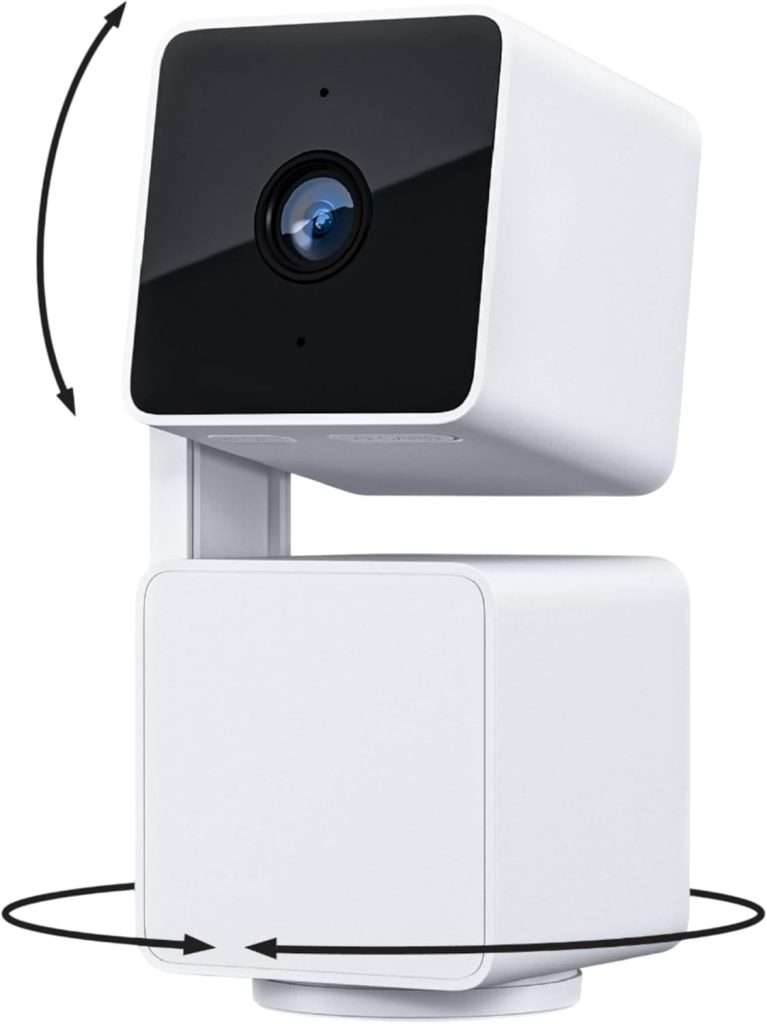
Who it’s for: The value-conscious homeowner who needs solid, reliable security performance and a surprising array of features without wanting to make a significant financial investment.
Winter Performance: The Wyze Cam Pan v3 delivers winter specifications that are truly exceptional for its price point. It features an impressive minimum operating temperature of -20°C (-4°F) and a solid IP65 weatherproof rating, making it more than capable of handling winter in most parts of Canada. Crucially, it is a wired camera that draws power via a USB cable. This design choice provides excellent cold-weather reliability, as its operation is not impacted by the battery performance issues that affect wireless models.
Key Features: The camera’s standout feature is its mechanical pan-and-tilt functionality. As a top-tier pan-and-tilt camera, it has a 360-degree horizontal range of motion and a 180-degree vertical range. A single Wyze Cam Pan v3 can monitor a vast area that would otherwise require multiple fixed cameras. It records in 1080p HD and includes color night vision, which uses the ambient light and a starlight sensor to produce color images in low-light conditions. For storage, it offers the flexibility of an optional cloud subscription or free local recording via a user-supplied microSD card.
Verdict: The Wyze Cam Pan v3 offers an unbeatable value proposition. Its combination of a remarkably low price, robust winter-ready specifications, reliable wired power, and unique pan-and-tilt functionality makes it a standout choice. For anyone looking to secure their property effectively on a tight budget, this camera is a clear winner.
Pros:
- Exceptional value for the price
- Solid -20°C operating temperature and IP65 rating
- 360-degree pan and tilt provides wide coverage
- Wired power for enhanced winter reliability
- Option for free local storage with a microSD card
Cons:
- 1080p resolution is lower than premium models
- Wired installation is less flexible than battery-powered options
👉 Check Latest Price on Amazon Canada →Wyze Cam Pan v3
4. Blink Outdoor 4: Best for Battery Life & Low Maintenance
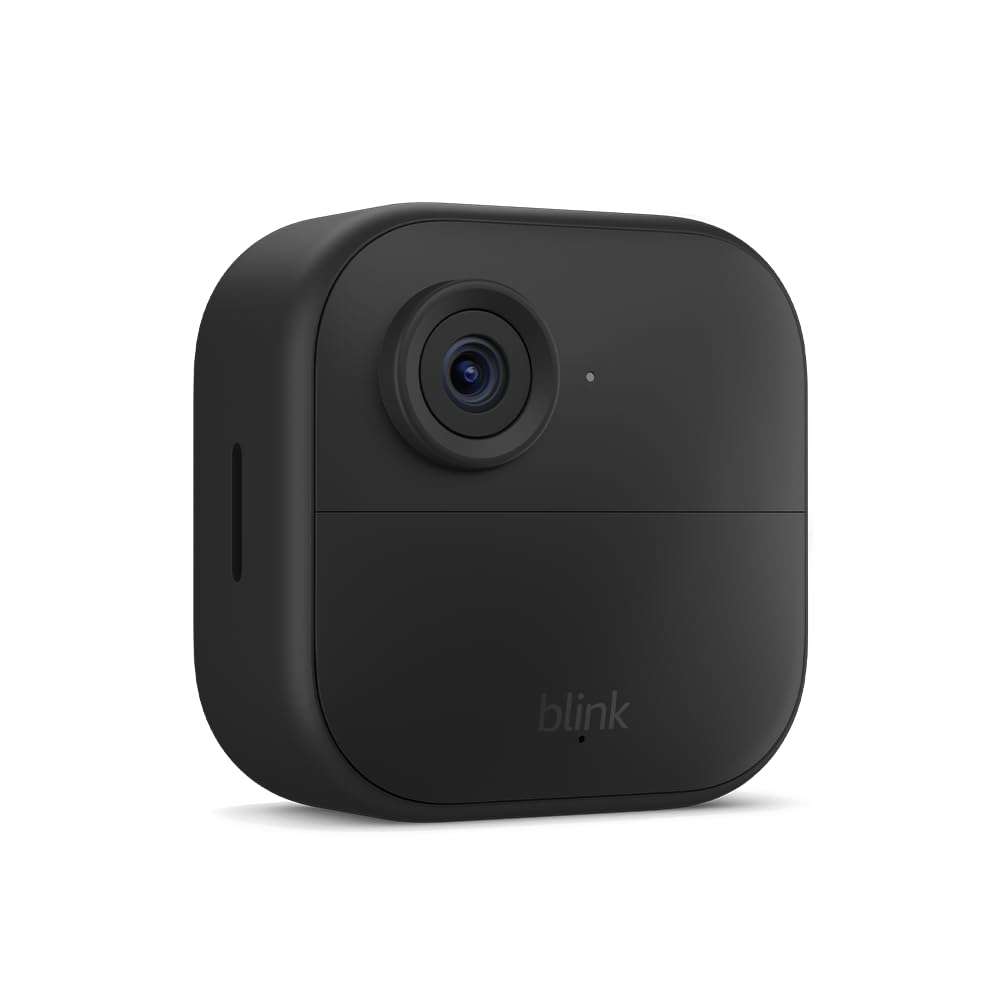
Who it’s for: The user who wants a simple, wire-free security solution and whose top priority is minimizing maintenance. This homeowner values a “set it and forget it” approach and wants to avoid the hassle of frequently charging batteries.
Winter Performance: The Blink Outdoor 4 is well-equipped for Canadian winters with a minimum operating temperature of -20°C (-4°F) and an IP65 weatherproof rating. Its key advantage lies in its power system. Instead of a rechargeable lithium-ion pack, it uses two standard AA lithium batteries. This, combined with a low-power chip, allows Blink to claim an extraordinary battery life of up to two years on a single set of batteries. While extreme cold will still reduce this lifespan, it will far outlast any rechargeable competitor, drastically cutting down on winter maintenance.
Key Features: The headline feature is undoubtedly the two-year battery life, which sets it apart in the wireless market. The system requires a Blink Sync Module 2 (included in kits), which acts as a hub and enables local video storage on a USB drive (sold separately), providing a subscription-free storage option. The camera records in 1080p HD, features two-way audio, and integrates seamlessly with the Amazon Alexa ecosystem.
Verdict: If your primary goal is to avoid ladders in February, the Blink Outdoor 4 is an excellent choice. Its unparalleled battery life makes it the most convenient and low-maintenance wireless camera available. However, be prepared for a trade-off in video resolution (1080p is sufficient but not as detailed as 2K or 4K) and the fact that some advanced features, like person detection, require a Blink subscription plan.
Pros:
- Up to two-year battery life minimizes maintenance
- Good -20°C cold weather rating
- Simple, wire-free installation
- Local storage option via the Sync Module 2
Cons:
- 1080p resolution is less detailed than competitors
- Some AI features require a paid subscription
- Field of view is narrower than some other models
👉 Check Latest Price on Amazon Canada →Blink Outdoor 4
5. Ring Spotlight Cam Pro: Best for Motion-Activated Lighting
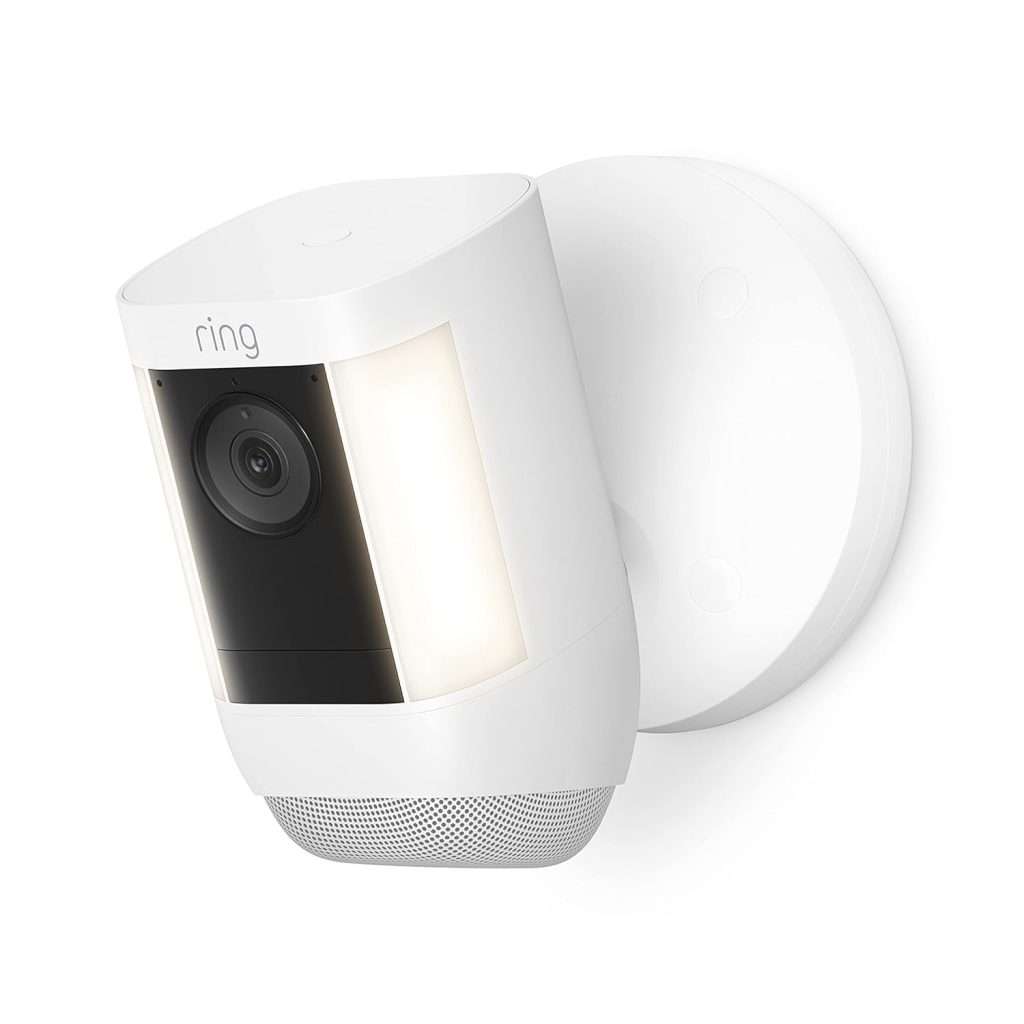
Who it’s for: The homeowner who wants their security camera to be an active deterrent and is already invested in the Amazon Alexa or Ring ecosystem. This user values the security provided by a powerful outdoor light.
Winter Performance: The Ring Spotlight Cam Pro is rated for a minimum operating temperature of -20.5°C (-5°F), placing it on par with Arlo and Blink for cold-weather suitability. It is available in battery, solar, and wired versions, but the popular battery model is subject to the same performance degradation and sub-zero charging limitations as other devices in its class. In cold weather, battery life will be reduced, and recharging will require bringing the battery pack indoors.
Key Features: The camera’s primary feature is its set of powerful, motion-activated LED spotlights, which serve to both illuminate the scene for clear color night video and startle potential intruders, making it a contender for the best floodlight camera. It records in sharp 2K resolution and includes a loud, remote-activated siren for an added layer of deterrence. Ring’s premium features include radar-powered 3D Motion Detection and Bird’s Eye View, which use an overhead map to show the path of a detected subject, providing more context and more precise alerts than standard motion detection.
Verdict: The Ring Spotlight Cam Pro is a top-tier deterrent camera with advanced motion-tracking features that provide enhanced security. It is the obvious choice for homeowners already committed to the Ring ecosystem. However, its heavy reliance on a Ring Protect subscription to access video recordings and the universal challenges of battery performance in cold weather remain key considerations for any Canadian buyer.
Pros:
- Powerful motion-activated spotlights act as a great deterrent
- Advanced 3D Motion Detection for more accurate alerts
- Sharp 2K video resolution
- Seamless integration with Amazon Alexa and other Ring devices
Cons:
- Virtually all essential features, including video storage, require a subscription
- Battery performance is significantly impacted by cold weather
👉 Check Latest Price on Amazon Canada →Ring Spotlight Cam Pro
Buyer’s Guide: Critical Choices for Your Canadian Security Setup
Choosing the right camera involves more than just picking a model from a list. It requires making strategic decisions based on your specific climate, budget, and technical comfort level.
Wired vs. Wireless: The Canadian Climate Compromise
When evaluating the various security cameras on the market, the decision between a wired and a wireless camera is the most important one for a Canadian homeowner. It is a direct trade-off between Reliability (Wired) and Convenience (Wireless).
As established, all battery-powered cameras, regardless of brand, suffer from the same limitation: their lithium-ion batteries will not charge at temperatures below 0°C. This means that during a prolonged cold spell, your wireless camera’s battery will inevitably drain, and the camera will go offline until you can bring the battery inside to warm up and recharge. This transforms a supposedly convenient device into a high-maintenance one during the winter.
For this reason, wired cameras like the Lorex 4K Smart Deterrence and the Wyze Cam Pan v3 are objectively the most robust and reliable solutions for the coldest regions of Canada, such as the Prairies, the North, and parts of Quebec and Ontario. If you prioritize guaranteed uptime and performance through the worst of winter, the effort of a wired installation is a worthwhile investment.
The Real Cost of Security: Decoding Subscription Fees
The upfront price of a security camera is often misleading. The true Total Cost of Ownership (TCO) over several years can vary dramatically depending on the brand’s business model.
Most of the major wireless brands, including Ring, Arlo, Google, and Blink, operate on a subscription-based model. While the cameras may function without a plan, key features like storing video clips in the cloud, advanced AI detection (people, packages, etc.), and interactive notifications are often locked behind a monthly paywall. These fees, while seemingly small, add up significantly over the life of the product.
Conversely, brands like Lorex and Reolink build their systems around local storage, typically on an NVR, DVR, or a microSD card. This means that after the initial hardware purchase, there are no mandatory ongoing costs to access your camera’s full feature set.
Consider this TCO example over three years: a $200 camera with a $5/month subscription will ultimately cost $380. A $250 subscription-free camera will still only cost $250. For the value-conscious Canadian buyer, understanding the TCO is critical to making a financially sound decision.
Is 4K Overkill? Matching Resolution to Your Real-World Needs
The push towards 4K resolution is a major marketing trend, but it’s not always the best choice for every user.
The primary benefit of 4K, as offered by cameras like the Lorex model, is the incredible level of detail it provides. This allows you to digitally zoom in on distant objects, like a face or a license plate, without the image becoming a pixelated mess.
However, this quality comes at a cost. 4K video streams consume significantly more internet bandwidth and require much more storage space than 1080p or 2K video. If your internet connection is slow or your data is capped, streaming 4K video may be problematic.
For most residential applications, a high-quality 2K camera, like the Arlo Pro 5S 2K or Ring Spotlight Cam Pro, offers the perfect balance of excellent detail and manageable data consumption. A 1080p camera, like the Blink Outdoor 4, is perfectly sufficient for general monitoring and identifying subjects at closer ranges.
Frequently Asked Questions (FAQs)
How does extreme cold really affect security camera batteries?
Extreme cold has two main effects on lithium-ion batteries. First, it slows down the internal chemical reaction that generates electricity, which reduces the battery’s overall capacity and its ability to deliver power. This is why a battery might drain from 50% to 0% very quickly in the cold. Second, and most importantly, it prevents the battery from safely accepting a charge. Attempting to charge a frozen lithium-ion battery can cause permanent damage. This is why all reputable manufacturers electronically disable charging at temperatures below 0°C.
Will my camera work if the power goes out during a blizzard?
This depends on your setup. A standard wired camera will lose power and go offline immediately unless it is connected to an uninterruptible power supply (UPS). A battery-powered camera will continue to operate during a power outage, which is a key advantage. However, it will only be able to record locally (if it has a microSD card) or send you notifications if your outdoor Wi-Fi router and modem are also connected to a UPS.
What is the minimum IP rating I should accept for a camera in Canada?
The absolute minimum rating for any electronic device intended for outdoor use in Canada should be IP65. This rating ensures the device is completely sealed against dust and can resist low-pressure water jets from any direction, which is sufficient to protect it from blowing snow and driving rain. Anything less is not suitable for year-round outdoor exposure.
The Final Verdict for Canadian Homeowners
Choosing the right outdoor security camera in Canada for a brutal winter is about balancing modern smart features with old-fashioned durability. Your ideal camera depends on your climate, your budget, and your tolerance for maintenance.
For the Ultimate Pragmatist: The Lorex 4K Smart Deterrence IP Camera is the clear choice. Its unmatched -30°C cold rating, wired reliability, and subscription-free model make it the most dependable and cost-effective long-term solution for those who prioritize function above all else.
For the Connected Tech Enthusiast: The Arlo Pro 5S 2K is the winner. Its best-in-class video quality, feature set, and deep smart home compatibility are perfect for a modern, connected home, provided you understand and can manage the battery’s winter charging limitations.
For the Budget-Conscious Protector: The Wyze Cam Pan v3 delivers incredible value. It offers winter-ready specifications, the reliability of wired power, and versatile pan-and-tilt functionality at a price that is simply impossible to ignore. It proves that robust outdoor home security doesn’t have to come with a premium price tag.
If you want to check our reviews on other home security and automation products please feel free to check following articles:
Full Affiliate Disclosure: Home Secure Guide participates in the Amazon Services LLC Associates Program and other affiliate programs. This means we may earn a commission if you click on a link and make a purchase, at no additional cost to you. These commissions help support our Canadian‑focused, independent research and guides.